
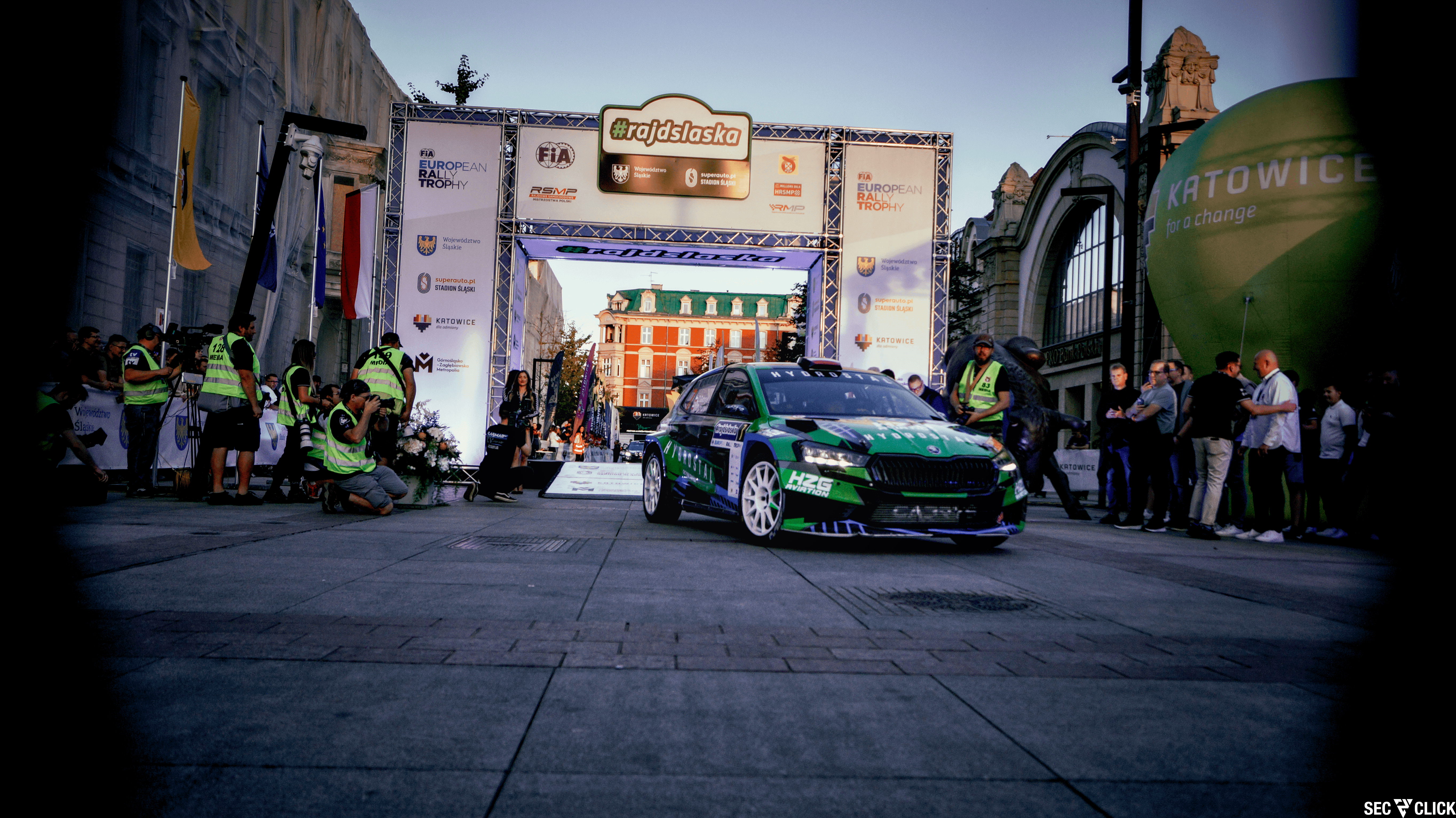

After two decades spent on the fast, sweeping gravel highways of Masuria, the oldest rally in Poland and the second oldest in the world is undergoing the most radical transformation in its century-long history. The 82nd edition of Rally Poland 24-26 July 2026 officially moves to the demanding, high-speed asphalt stages of the Silesian Voivodeship. Serving as the fourth round of both the FIA European Rally Championship (FIA ERC) and the Polish national championship, this event promises to be a spectacular display of mechanical engineering and pure driving grit, highlighted by the highly anticipated return of three-time European Champion Kajetan Kajetanowicz.
Chapter I: The Silesian Tarmac Shift: Leaving Mikołajki Behind
Since 2005, the town of Mikołajki served as the spiritual home of Rally Poland, famed for its loose gravel stages that allowed drivers to slide their cars with dramatic steering inputs. However, 2026 marks the end of this historic era. Moving the rally to the Silesian region represents a major shift in both physical demands and competitive strategy. Tarmac is an unforgiving surface; unlike gravel, which forgives minor setup errors and allows for fluid lines, the abrasive Silesian asphalt punishes even a millisecond of delayed braking or aggressive steering input.
With the rally headquarters based in Katowice and the central service park situated inside the legendary Superauto.pl Silesian Stadium in Chorzów, affectionately known as the “Witches’ Cauldron” the event gains a unique, highly accessible metropolitan atmosphere. The special stages, carved through the mountainous regions of the Beskidy and Silesian Cieszyn, feature highly inconsistent grip levels, narrow passages between historic brick buildings, and high-speed crests where cars will exceed 160km/h, demanding absolute precision from the crews’ pace notes.
Chapter II: Return of the King: Kajetanowicz Back on Home Asphalt
The most significant sporting and promotional story of the 2026 edition is the official entry of Kajetan Kajetanowicz. The ORLEN Rally Team star, who made his debut in this national classic over twenty years ago in a Peugeot 206 XS, is returning to the very roads where he learned his craft and built his world-class career. The three-time Rally Poland winner will pilot a state-of-the-art Toyota GR Yaris Rally2, ready to measure his speed against Europe’s elite.
For Kajetanowicz, born in Cieszyn, this event is a highly emotional homecoming. While he typically campaigns a full schedule in the World Rally Championship (WRC2), competing in front of his home fans on Silesian tarmac was a key priority for his 2026 season. He will be joined on the entry list by defending FIA ERC champion Mikołaj Marczyk, setting up a thrilling battle for local pride against the regular European Championship frontrunners, for whom these treacherous roads will be a completely new challenge.
Chapter III: Technical Spotlight: Suspension Kinematics and Tyre Thermal Management
Transitioning from a gravel setup to a dedicated tarmac configuration requires a complete overhaul of a Rally2 car’s mechanical architecture. The most immediate visual difference is the vehicle’s ride height, which is slammed from a gravel clearance of approximately 220 down to just 110-120 mm. Extremely stiff damper rates, designed by Reiger or Öhlins, are utilized to minimize roll and pitch during rapid weight transfers over the twisty sections.
Another critical engineering focus is keeping the wheel camber angles stable under extreme lateral cornering loads. To achieve this, engineers utilize highly rigid anti-roll bars to prevent tyre deformation. The tyres themselves (supplied by Michelin and Pirelli) must operate within highly specific thermal windows.
While the damp, shaded forest stages in the early morning may require soft-compound rubber optimized for temperatures between 20C and 40C, the hot, exposed afternoon asphalt will force teams to utilize hard compounds. These hard compounds require carcass temperatures of 80C to 110C to generate peak mechanical grip, making tyre strategy and pressure stabilization a critical element of team telemetry.
Chapter IV: Rebirth of Legends: The Infamous Przegibek Pass and the Silesian Stadium
The organizers have mapped out a punishing 187.60km route divided into 15 grueling special stages. The undisputed highlight of the weekend is the return of the legendary Przegibek stage 6.50km. This iconic mountain pass located near Bielsko-Biała returns to the Rally Poland itinerary after a 27-year absence. The stage features over fifty sharp hairpins (patelnie), which will test the co-drivers’ reading pace and require the drivers to masterfully use the hydraulic handbrake to rotate the rear end while maintaining front-axle traction on entry.
In addition to the mountain stages, fans will be treated to spectacular urban action. The ceremonial start in downtown Katowice (Dworcowa Street) and Friday’s opening super special stage, GZM Katowice 2.20km, held around the iconic Spodek arena, will draw massive crowds. Saturday’s leg will conclude under the massive roof of the Silesian Stadium on a custom 1.50km spectator track. This world-class sports venue in Chorzów will also host the final podium ceremony on Sunday evening at 19:30, crowning the winner of this historic asphalt adventure.


