
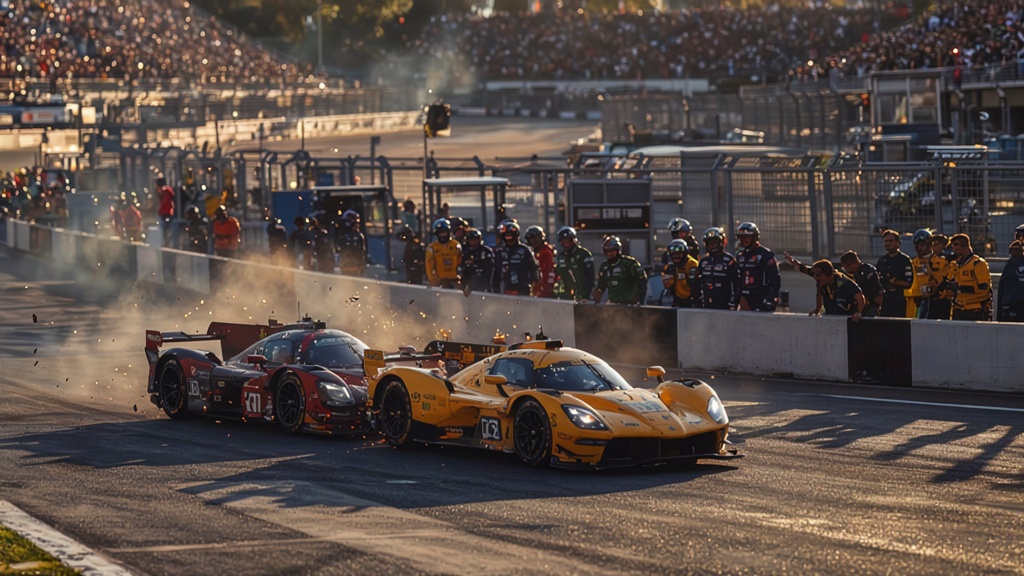

Chapter I: The Quest for Redemption at Interlagos
For the independent AF Corse team, the 2026 FIA WEC season had been a mixture of immense potential and frustrating setbacks. Coming off the back of a grueling 24 Hours of Le Mans where they left everything on the table, the crew of the yellow No. 83 Ferrari 499P arrived in Brazil highly motivated.
The Autódromo José Carlos Pace is a circuit that demands a highly responsive chassis and excellent traction out of its low-speed corners. While the factory Ferrari team had shown good race pace in previous rounds, the privateer entry needed to find a setup that could handle both the scorching daytime heat and the rapidly cooling track temperatures expected in the latter half of the six-hour race.
Chapter II: Qualifying Compromises and Starting Strategy
The weekend did not start as smoothly as hoped during Saturday’s qualifying sessions. The No. 83 Ferrari struggled to extract maximum grip from the soft compound Michelin tires on a hot track, leaving them in tenth position on the starting grid. This meant that the team would have to fight their way through the midfield dirty air right from the start.
Analyzing the race strategy, the AF Corse engineering team decided to start the race with Yifei Ye at the wheel. The plan was simple yet aggressive: make use of the hybrid ERS system to make early moves, secure clean air as quickly as possible, and run a consistent first stint to establish a solid platform for Hanson and Kubica to exploit later in the evening.
Chapter III: Yifei Ye’s Explosive Opening Stint
When the green flag dropped, Yifei Ye executed the start perfectly. The Chinese driver showed immense bravery, lunging down the inside of several rivals at the Senna S. Within the opening laps, Ye had sliced through the pack, climbing rapidly to sixth position. His race pace was highly competitive, matching the laptimes of the leading Cadillacs.
However, the stewards soon handed down a 5-second penalty to the No. 83 car for a minor start procedure violation. Despite this setback, Ye did not lose focus. He maintained a strong, consistent stint, occasionally running in a virtual third position during the pit-stop cycles. When he finally handed the car over to Phil Hanson, the team was firmly in the hunt for a top-five finish.
Chapter IV: Hanson’s Turbulent Middle Phase
The middle portion of the race proved to be the most challenging for the No. 83 crew. Phil Hanson took over the driving duties, but his out-lap was compromised by tire warm-up issues on the cooling track. The British driver lost several seconds trying to bring his medium compound Michelin tires into their optimal working window.
Hanson’s second stint deteriorated further during a tense moment in traffic. While attempting to lap a slower LMGT3 competitor, the Ferrari made contact, resulting in a 10-second time penalty. More critically, the collision caused noticeable aerodynamic damage to the front-right bodywork of the yellow 499P. The loss of front downforce made the car highly understeer-prone, severely hurting their pace in the winding second sector of the Interlagos circuit.
Chapter V: Enter Robert Kubica – The Final Two Hours
With two hours remaining on the countdown clock, Robert Kubica strapped into the cockpit of the damaged No. 83 Ferrari. The car had slipped down the order, hovering between eighth and tenth position. Kubica knew that he had a massive challenge ahead of him, driving a aerodynamically compromised car on a track that was getting colder by the minute.
Using all his legendary grit and technical expertise, the Polish driver quickly adjusted his driving style to compensate for the understeer. He utilized the hybrid power unit’s torque to stabilize the rear of the car, keeping his laptimes remarkably consistent. Kubica’s ability to navigate the dense traffic of LMGT3 backmarkers without losing momentum was a key factor in keeping the car within striking distance of the top units.
Chapter VI: Strategic Precision on the Pit Wall
While Kubica fought on track, the AF Corse engineers executed a flawless fuel-saving strategy. Recognizing that they could not match the raw pace of the undamaged leading cars, they focused on maximizing their fuel efficiency during the final stint.
By closely monitoring the fuel flow meter and advising Kubica on lift-and-coast techniques, the team managed to shave precious seconds off their final splash-and-go pit stop. This allowed Kubica to jump ahead of several competitors who had to take longer pit stops, elevating the yellow Ferrari to a highly respectable seventh position as the race entered its final, dramatic fifteen minutes.


